Introduction
In today’s digital-first world, a website is far more than an online brochure — it’s a powerful business asset that drives growth, builds credibility, and influences customer decisions. Yet, many businesses still view web development as a one-time expense rather than a long-term investment.
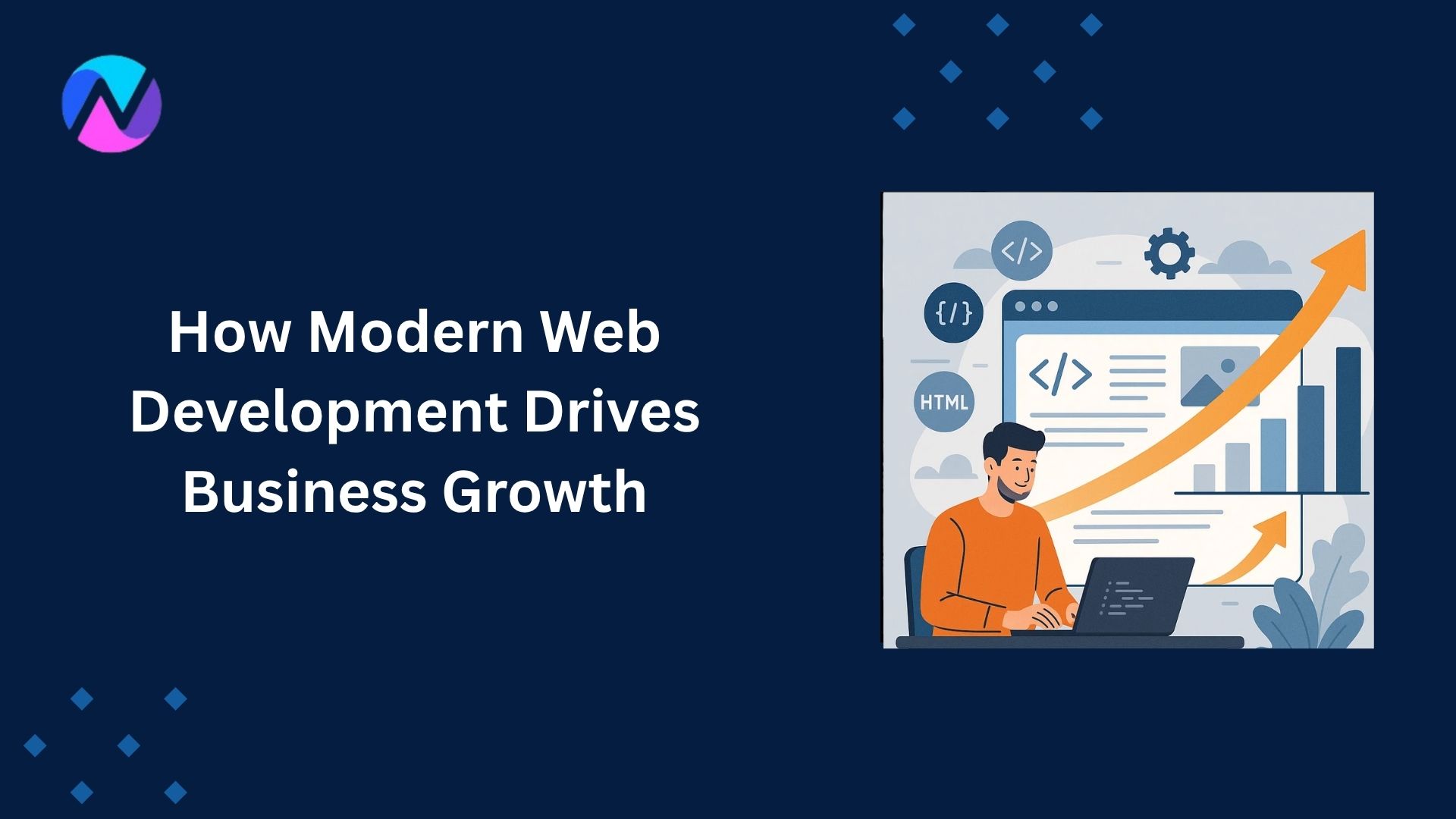
Modern web development combines technology, design, and strategy to create platforms that not only look impressive but also perform efficiently, convert visitors, and adapt to changing market trends. In this blog, we’ll explore how modern web development delivers measurable Return on Investment (ROI) — and why forward-thinking businesses are reaping the rewards.
Modern web development is defined as the practice of designing, building, and continuously optimizing a website using current technologies, performance standards, and user-experience principles so it actively contributes to revenue, trust, and long-term business growth — rather than sitting idle as a digital brochure.
First Impressions That Convert
Your website is often the first interaction potential customers have with your brand. A professionally developed site creates trust within seconds.
Modern web development ensures:
- Clean, responsive designs that look flawless on any device
- Fast loading speeds that reduce bounce rates
- Structured content that guides users toward inquiries or purchases
A visually appealing, high-performing website immediately signals reliability — turning visitors into paying customers.
Performance and Speed = Profit
A slow website is a silent business killer. Studies show that even a 1-second delay in page load time can reduce conversions by 7%.
Professional web developers use modern frameworks, caching, and optimization tools to enhance performance. The result?
- Better search rankings (Google loves fast websites)
- Improved user satisfaction
- Higher retention and conversion rates
When your site loads quickly and works smoothly, users stay longer — and that directly impacts your bottom line. According to research from Portent, B2B websites that load in one second convert up to 3 times more visitors than sites that take five seconds to load, and Google and Deloitte’s “Milliseconds Make Millions” study found that a mere 0.1-second improvement in mobile load speed increased retail conversions by 8.4%.
SEO-Driven Architecture
A beautifully designed website is useless if it can’t be found. That’s why SEO is built into modern web development from day one.
Key benefits include:
- Clean code and semantic structure that search engines can easily crawl
- Optimized URLs, meta tags, and schema markup for better visibility
- Mobile-first design, aligning with Google’s ranking preferences
When your website is SEO-friendly, it continuously attracts organic traffic — reducing dependency on paid advertising and increasing long-term ROI.
User Experience That Builds Loyalty
User Experience (UX) is no longer optional — it’s the foundation of digital success. Modern web development focuses on creating intuitive, user-centered designs that simplify navigation and increase engagement.
Features such as:
- Clear call-to-action buttons
- Predictive search and smart filtering
- Accessible layouts for all users
…ensure that customers not only find what they need but enjoy the process. Satisfied visitors are far more likely to return and recommend your brand. This isn’t just a design preference — Forrester research indicates that every $1 invested in UX can return as much as $100, an ROI of roughly 9,900%, making user experience one of the highest-leverage investments a business can make in its website.
Integration with Business Tools
Today’s web platforms go beyond static pages — they seamlessly integrate with CRM systems, analytics tools, chatbots, and automation workflows.
This integration empowers businesses to:
- Track leads and user behavior in real-time
- Automate follow-ups and marketing campaigns
- Manage sales pipelines directly from the website
These smart connections turn your website into a 24/7 sales and customer service hub, directly impacting revenue and efficiency.
Security Builds Trust
Cybersecurity is a growing concern, especially for e-commerce and service-based websites. Modern web development emphasizes secure coding practices, SSL certificates, and regular updates.
Why it matters:
- Protects customer data and transactions
- Prevents reputational damage from breaches
- Increases user confidence, boosting conversion rates
At Neptune Infotech, every website is built with security-first architecture — because customer trust is the foundation of business growth.
Future-Proof Scalability
Business growth shouldn’t mean rebuilding your website from scratch. Scalable web development ensures your platform evolves as your company expands.
With modular frameworks and API-driven architectures, you can easily add:
- New product lines
- Payment systems
- Third-party integrations
This adaptability saves money in the long run — another layer of ROI many companies overlook.
Data-Driven Decision Making
A modern website provides more than engagement — it provides insights. Built-in analytics dashboards track how users interact with your site, helping you understand what works and what needs improvement.
By leveraging data, businesses can:
- Refine marketing strategies
- Identify high-performing content
- Adjust design and navigation for better results
Every click tells a story — and modern web development turns that data into smarter decisions.
Frequently Asked Questions
How quickly can a business expect ROI from a new website?
Most businesses start seeing measurable improvements — more inquiries, longer visit durations, or better search rankings — within 3 to 6 months of launching a professionally developed, SEO-optimized website, though full ROI depends on industry, traffic volume, and marketing efforts around the site.
What is the difference between web design and web development for business ROI?
Web design focuses on visual appearance and layout, while web development covers the underlying code, performance, security, and functionality. Both work together, but ROI is driven primarily by development quality — site speed, SEO structure, and integrations — not visuals alone.
How can I measure the ROI of my website?
Track metrics such as conversion rate, cost per lead, organic traffic growth, average session duration, and revenue attributed to website inquiries or online sales, then compare these against your development and maintenance costs over the same period.
Does website speed really affect revenue?
Yes. Independent research consistently links faster load times to higher conversion rates and lower bounce rates, which means speed optimization has a direct, measurable effect on sales and lead generation.
Is investing in a new website worth it for a small business?
For most small businesses, yes — a modern, mobile-friendly, secure website improves credibility, search visibility, and lead capture, all of which compound over time into a stronger sales pipeline compared to relying on an outdated or poorly performing site.
Conclusion
Web development is no longer just about aesthetics; it’s about strategy, performance, and measurable impact. A well-crafted website drives traffic, builds trust, automates processes, and delivers a tangible return on every rupee invested.
At Neptune Infotech, we don’t just build websites — we create digital ecosystems that help businesses grow faster, operate smarter, and stay ahead of the competition.
🚀 Let’s turn your website into your most valuable business asset.
Contact us today to discover how modern web development can transform your digital journey.