Introduction
In today’s fast-moving digital world, businesses need more than just a website — they need a complete, connected, and scalable digital ecosystem. That’s where full-stack development comes in.
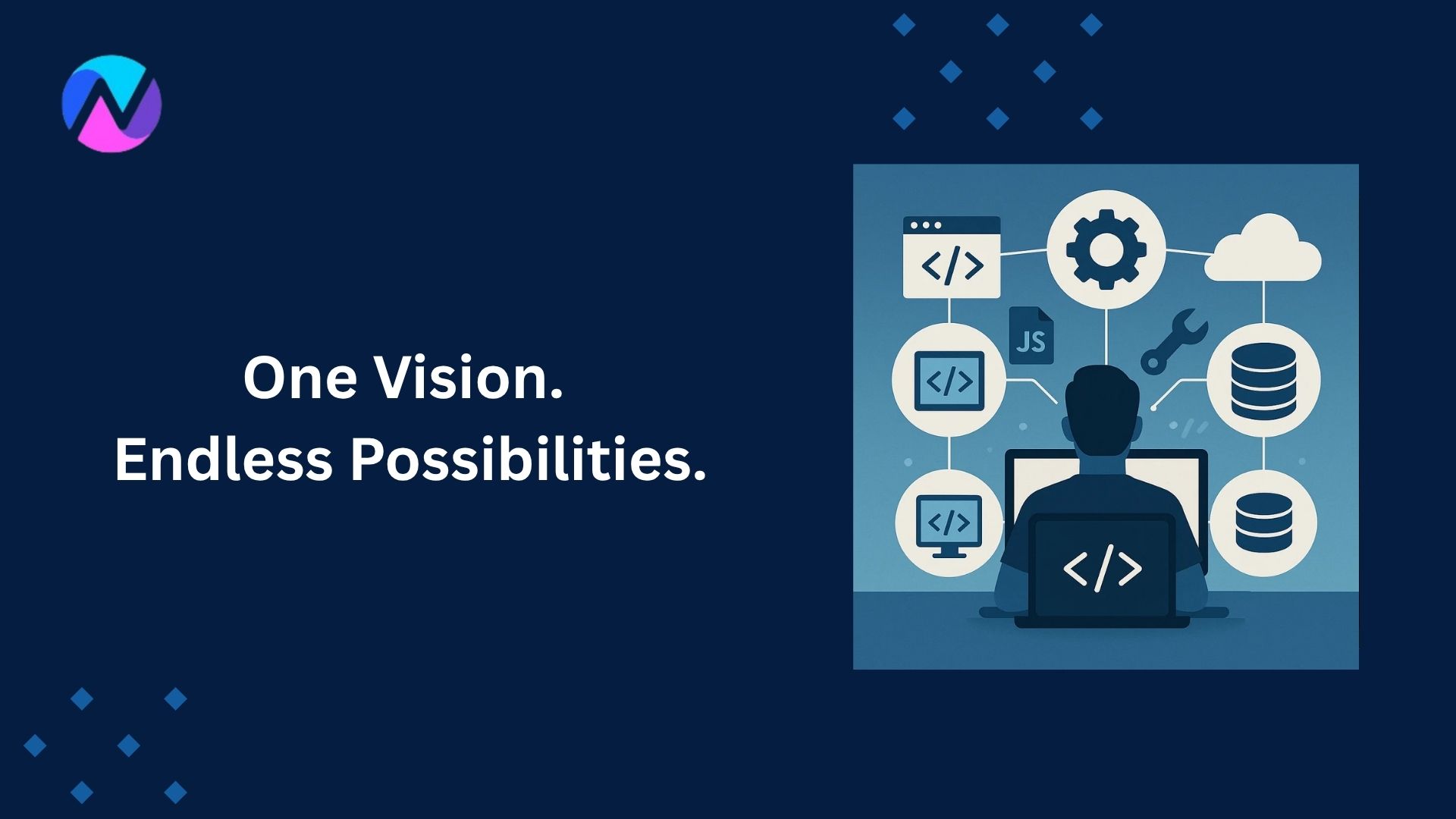
Full-stack development refers to the creation of both the front-end (what users see) and back-end (what powers the system) parts of a website or application. This end-to-end approach allows for faster development, better performance, and seamless collaboration between design, logic, and data.
At Neptune Infotech, we specialize in building cohesive, high-performance web solutions that connect strategy, creativity, and technology — all under one roof.
What Is Full-Stack Development?
“Full-stack” simply means the complete set of layers required to build and run a digital product — from the visual interface users interact with to the database, logic, and infrastructure working behind the scenes.
A full-stack developer understands how every piece fits together — ensuring that the entire system works smoothly, efficiently, and securely.
This holistic approach ensures businesses get a single, well-integrated solution instead of multiple disconnected parts.
The demand for this approach shows up clearly in industry data. According to the 2025 Stack Overflow Developer Survey, full-stack developer is the single most common developer role reported, claimed by 27% of respondents — more than any other specialization. The global custom software development market is projected to grow from $53.02 billion in 2025 to $334.49 billion by 2034, according to Precedence Research figures cited by Itransition, reflecting how heavily businesses are investing in unified, end-to-end digital solutions. Research and Markets similarly valued the global full-stack development services market at USD 120.81 billion in 2025, underscoring how mainstream this approach has become for companies of every size.
Why Businesses Prefer End-to-End Development
Many companies struggle when front-end and back-end development are handled by separate teams or vendors. Communication gaps, duplicated work, and delays are common issues.
Full-stack development solves these challenges through unified execution.
Key advantages include:
- Faster delivery: One expert team manages every stage of development.
- Better coordination: The design and functionality evolve in sync.
- Lower costs: Fewer vendors and faster timelines reduce overall expenses.
- Single accountability: One partner is responsible for the complete outcome.
At Neptune Infotech, this approach ensures consistency, efficiency, and quality from concept to completion.
The Business Benefits of Full-Stack Development
Full-stack development isn’t just a technical method — it’s a strategic business advantage.
a. Accelerated Time-to-Market
With all stages managed by one team, businesses can launch faster — critical in today’s competitive digital landscape.
b. Scalability and Flexibility
As your business grows, your website or application can easily scale and adapt without major redevelopment.
c. Improved User Experience
Because the same team designs and builds the entire platform, every element — from visuals to performance — works seamlessly together.
d. Cost Efficiency
A unified workflow minimizes redundancy and shortens development cycles, providing long-term value.
The Neptune Infotech Approach to Full-Stack Development
At Neptune Infotech, full-stack development means more than writing code — it’s about building complete digital solutions that support your goals.
Our process typically includes:
- Discovery & Planning: Understanding your business, audience, and objectives.
- Design & Experience: Creating intuitive interfaces and clear user journeys.
- Development: Building robust, efficient, and secure digital systems.
- Testing & Quality Assurance: Ensuring flawless performance across devices.
- Deployment & Support: Launching smoothly and maintaining long-term reliability.
This end-to-end model provides clients with a single, transparent workflow — designed for efficiency and measurable results.
Long-Term Value Through a Unified Approach
When design, development, and strategy come together under one team, your business gains a long-term advantage.
Full-stack development creates:
- Simplified maintenance — one partner understands the entire system.
- Continuous optimization — easier updates and improvements.
- Future readiness — scalable systems that adapt as your business evolves.
In short, it’s a foundation for sustainable digital growth.
Frequently Asked Questions
What is the difference between full-stack development and using separate front-end and back-end teams?
Full-stack development uses a single team or developer who manages both the front-end (user interface) and back-end (server, database, logic) of an application, rather than splitting the work between separate specialized teams. This reduces communication gaps, speeds up delivery, and ensures the entire system is built with a consistent architecture.
Is full-stack development suitable for large enterprise projects, or only small businesses?
Full-stack development works for businesses of all sizes. Small businesses benefit from lower costs and faster launches, while larger enterprises benefit from simplified maintenance, since a single team understands the entire system instead of coordinating across multiple vendors.
What technologies do full-stack developers typically use?
Full-stack developers commonly work with front-end technologies like HTML, CSS, JavaScript, and frameworks such as React or Angular, alongside back-end technologies like Node.js, Python, or PHP, and databases such as MySQL, PostgreSQL, or MongoDB.
How does full-stack development reduce project costs?
Because one team manages the entire application lifecycle — from design to deployment — businesses avoid the overhead of coordinating multiple vendors, reduce redundant work, and shorten development timelines, all of which lower total project costs.
How long does it take to build a full-stack web application?
Timelines vary based on complexity, but a straightforward full-stack web application can typically launch in a few weeks, while more complex, feature-rich platforms may take several months. Working with a single full-stack team, like Neptune Infotech, generally shortens this timeline compared to coordinating separate front-end and back-end vendors.
Conclusion
Full-stack development represents the future of smart, scalable, and efficient web solutions. It allows businesses to save time, reduce costs, and achieve consistent quality — all through one integrated process.
At Neptune Infotech, our full-stack approach combines strategic insight, creative design, and robust development to deliver end-to-end digital experiences that truly perform.
🚀 Looking for a complete web solution?
Let’s build something extraordinary — together.