Getting a passport photo in the US often feels unnecessarily frustrating. Retail pharmacies charge $15–$25 for two tiny prints, and a millimetre‑scale head‑size error can lead to costly rejections.
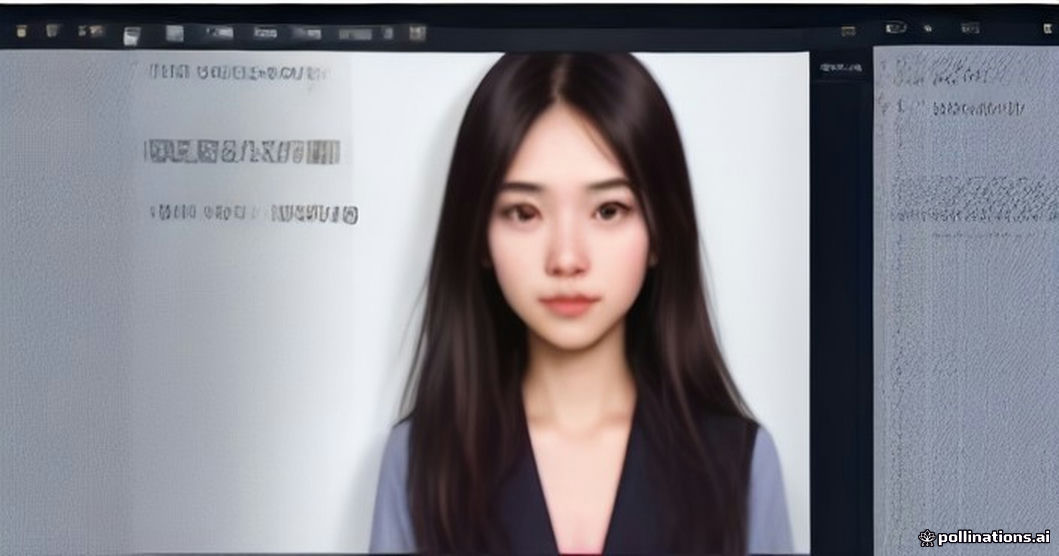
In‑browser passport photo checker refers to a web application that validates and formats a selfie to meet official passport photo specifications without leaving the browser.
Why Traditional Passport Photo Services Fail
Even after paying for a professional shoot, applicants frequently encounter rejections due to subtle biometric violations:
- Head height must occupy 50%–69% of the image height.
- Shadows or background shades that deviate from the required off‑white.
- Head tilts or eye‑level inconsistencies measured in millimetres.
According to a 2026 article, a pharmacy visit can cost $15–$25 for two prints, and applicants often miss compliance by as little as 2 mm in head size (source: "How I Built an AI‑Assisted Passport Photo Studio in the Browser", Oct 19 2026).
Choosing Next.js 16 and MediaPipe for On‑Device Computer Vision
Next.js 16 brings edge‑ready rendering and built‑in API routes, allowing us to keep the entire image pipeline client‑side while still benefiting from server‑side optimizations.
MediaPipe supplies a lightweight, on‑device landmark detection model. The library provides 468 facial landmarks that enable precise head‑size calculations and background removal (source: "GitHub - bargainfactory/visapass-photo").
Privacy‑First Architecture: All Processing Stays in the Browser
To respect user privacy, the application never uploads raw images to a server. The flow looks like this:
- User selects or captures a selfie.
- MediaPipe runs entirely in WebAssembly, extracting landmarks.
- Compliance logic runs in a Web Worker, returning feedback instantly.
- Only the final, compliant JPEG (or a printable PDF) is offered for download.
This approach eliminates data‑exfiltration risks and aligns with GDPR‑style data‑minimization principles.
Implementing ICAO Compliance Rules
International Civil Aviation Organization (ICAO) standards define the exact geometry of a passport photo. Our implementation encodes these rules as simple JavaScript predicates:
- Head‑height ratio: 0.5 – 0.69 of total image height.
- Eye‑line position: Eyes must be positioned between 28% and 38% of the image height.
- Background colour: Must be within a narrow RGB range for off‑white.
If any rule fails, the UI highlights the offending area and offers actionable suggestions (e.g., “move closer”, “adjust lighting”).
Performance Tips: Edge Caching and WebAssembly
Even though the heavy lifting happens in the browser, we still leverage Next.js edge functions to serve static assets (JS bundles, WASM files) from the CDN nearest to the user. This reduces latency to under 100 ms for initial load.
Key performance tricks include:
- Lazy‑loading the MediaPipe WASM module only after the user selects an image.
- Using OffscreenCanvas for image resizing to avoid main‑thread jank.
- Compressing the final JPEG to 300 DPI while preserving visual fidelity.
Frequently Asked Questions
Is the photo processing truly offline?
Yes. All landmark detection, background removal, and compliance checks run inside the browser using WebAssembly; no image data is sent to any server.
Can the tool handle passport specifications for countries other than the US?
Our rule engine is modular. By swapping the JSON spec for a different country, the same pipeline validates against ICAO‑compliant dimensions for over 20 nations.
What browsers are supported?
The application works on modern browsers that support WebAssembly and Web Workers, including Chrome, Edge, Firefox, and Safari (desktop and mobile).
How does the solution stay up‑to‑date with changing government standards?
Compliance rules are stored in a version‑controlled JSON file. Updating the file and redeploying the Next.js app propagates new specifications instantly.
Do I need a backend server for this solution?
Only for static asset hosting and optional analytics. The core validation logic is completely client‑side, keeping infrastructure costs low.
Neptune Infotech can help you turn complex computer‑vision ideas into secure, scalable web solutions—reach out to explore a partnership.